Commensal rodents survive entirely by exploiting human architecture, moisture systems, and food storage. The term commensal defines species that share human tables, primarily Norway rats, roof rats, and house mice.…
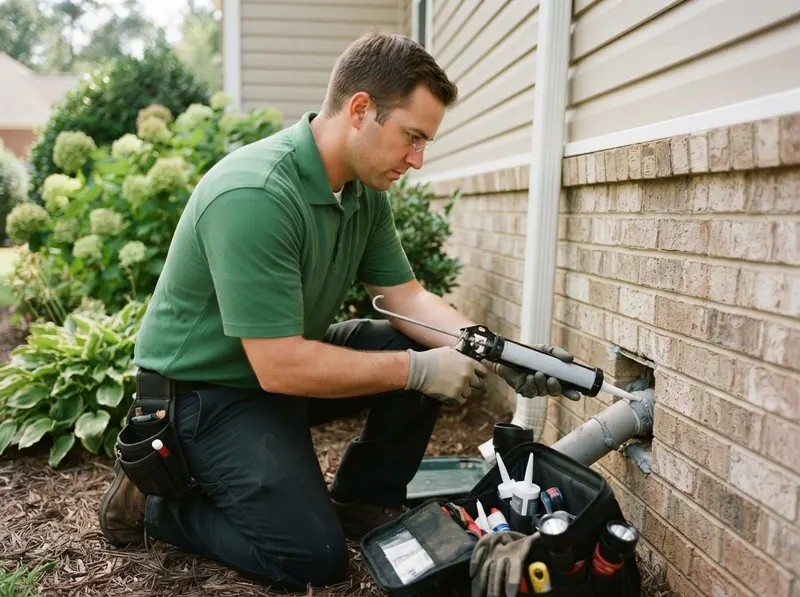
Commensal rodents survive entirely by exploiting human architecture, moisture systems, and food storage. The term commensal defines species that share human tables, primarily Norway rats, roof rats, and house mice. Unlike chemical extermination programs that merely suppress surface populations with bait blocks, physical exclusion modifies the building envelope permanently. In older Columbia neighborhoods such as Elmwood Park, Cottontown, and Shandon, crawl spaces resting on unreinforced brick piers often feature open vent screens and deteriorated mortar lines. According to the Centers for Disease Control and Prevention, an adult rat requires an opening of only 0.5 inches to enter a property, while an immature house mouse slips through apertures of 0.25 inches. Rodents entering crawl spaces systematically chew through fiberglass batts, sever low-voltage HVAC control wiring, and compromise electrical installations, presenting documented fire hazards tracked by the National Fire Protection Association.
Roof rats consistently exploit aerial access routes across mature tree canopies in Heathwood, Forest Acres, and Lake Katherine. These agile climbers use live oak limbs to reach asphalt shingle transitions, open ridge vents, and uncapped plumbing vent stacks. Standards outlined by the Environmental Protection Agency prioritize non-chemical pest prevention because broadcast rodenticides carry secondary poisoning risks for non-target wildlife and domestic animals. Rather than scattering toxic bait stations around children and pets, exclusion mechanics rely on physical barriers: 0.25-inch galvanized wire mesh, heavy-gauge aluminum valley covers, metal escutcheon plates, and concrete patch formulations. Guidelines established by the ASTM International define structural material tolerances necessary to prevent rodent gnawing, which exerts bite forces exceeding 7,000 pounds per square inch.
Properties bordering riparian greenways, such as Olympia near the Congaree River corridor and residences adjacent to Riverbanks Zoo and Garden, experience persistent Norway rat pressure due to high water tables and dense bank cover. A successful exclusion protocol proceeds through distinct operational stages. First, technicians perform an elevation audit of all foundations, siding kick-outs, soffit intersections, and utility entry penetrations. Second, exterior teams close primary gaps using non-corrosive metals, elastomeric sealants, and masonry mortars that comply with municipal residential codes managed by the Department of Housing and Urban Development. Third, technicians place non-chemical snap traps and captive capture mechanisms within attics and crawl spaces to eliminate animals trapped inside the defended perimeter. The Occupational Safety and Health Administration enforces strict respiratory and safety protocols for personnel entering enclosed crawl spaces containing accumulated rodent droppings and biological contaminants.
Structural exclusion represents a long-term engineering solution rather than a recurring chemical contract. Property owners facing active rodent gnawing must distinguish between quick poison placements and building fortification. Poison-only remediation leaves entry pathways unsealed, allowing new rodent colonies to recolonize the identical scent trails within weeks. Structural seal-ups demand an upfront investment in carpentry and masonry materials, but they eliminate the need for monthly poison replenishment. Information managed by the South Carolina Department of Health and Environmental Control highlights that eliminating rodent harborages in residential zones drastically reduces vector-borne pathogens like leptospirosis and murine typhus. Additional technical guidelines published by the National Pest Management Association confirm that pairing physical exclusion with targeted environmental sanitation delivers lasting indoor clearance without trapping homeowners in ongoing service subscriptions. Detailed rodent management literature through the Clemson University Cooperative Extension Service and the South Carolina Municipal Association consistently recommends mechanical exclusion over recurring pesticide distribution for permanent household defense.
Every job gets a firm, written price after a free on-site visit.
Tell us about your commensal rodent exclusion job in columbia and we'll send a clear, written quote, usually the same day.
 LakeForge Exterminating