Bed bug biology in the Midlands demands high heat transfer rather than routine synthetic pyrethroids. Research aggregated by the our team confirms that widespread resistance to consumer…
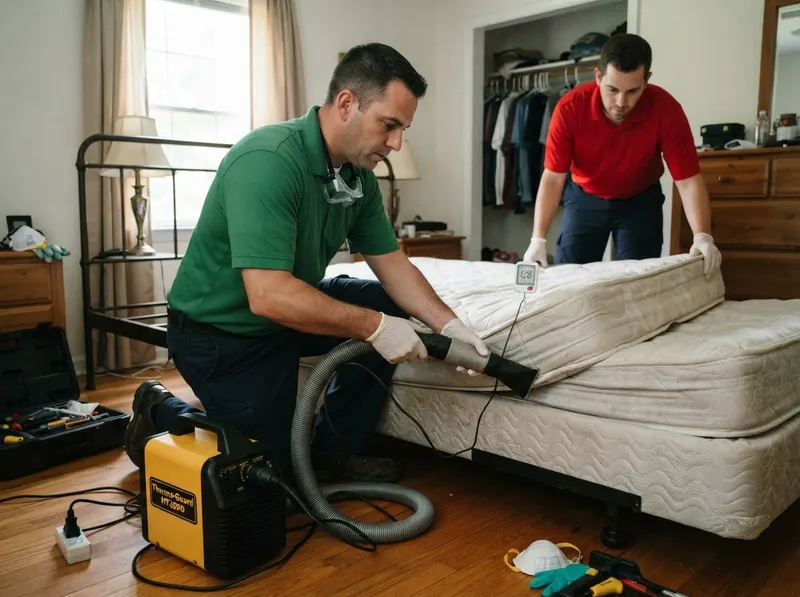
Bed bug biology in the Midlands demands high heat transfer rather than routine synthetic pyrethroids. Research aggregated by the US Environmental Protection Agency confirms that widespread resistance to consumer pyrethroid sprays leaves deep harborages intact. Thermal remediation raises ambient room temperatures to lethal thresholds between 122°F and 135°F, monitored via calibrated digital sensor arrays. Industrial heaters push convective airflow through interior partitions, wall cavities, and furniture fabrics, denaturing insect cellular proteins within minutes. This dynamic thermal process penetrates deep voids where over-the-counter surface contact sprays cannot reach, neutralizing heat-sensitive eggs that typically trigger secondary flare-ups 14 days later.
Structure preparation dictates thermal penetration success. Historical floorplans across Earlewood, Cottontown, and Elmwood Park present lath-and-plaster assemblies that require longer thermal soak cycles than modern drywall construction found in Lake Katherine or Forest Acres. The structural standard documented by the National Pest Management Association emphasizes pairing whole-room thermal loading with targeted mechanical extraction. Operators deploy sealed HEPA vacuums meeting National Institute for Occupational Safety and Health filtration ratings to physically remove aggregated bed bug clusters from box springs, headboards, and tack strips. Technicians then apply amorphous silica dust verified under Beyond Pesticides safety guidelines into wall outlets, switch boxes, and floor joints to erect an inorganic barrier against fleeing nymphs.
Site characteristics dictate the exact mechanical protocol. If an infestation is isolated to a single detached sleeping quarter in Shandon or Rosewood, precision targeted desiccant injection paired with localized steam and mattress encasements provides clinical control without the equipment footprint of high-output diesel-electric heat trailers. Conversely, multi-room infestations in student properties near Olympia and The Vista require whole-structure convective heating to eliminate perimeter escape routes. Data from the Penn State Extension demonstrates that bed bugs instinctively seek cooler wall voids when ambient temperatures spike unevenly; directional high-velocity air movers prevent these thermal shadows from offering refuge.
Remediation integrates clinical safety checks to protect interior contents throughout the treatment window. Technicians monitor heat distribution using infrared imaging verified through the National Institute of Standards and Technology thermometry protocols, ensuring heat levels do not breach 140°F, which safeguards structural adhesives, finish carpentry, and personal electronics. Guidelines from the South Carolina Department of Public Health and structural pesticide criteria enforced by Clemson University Department of Pesticide Regulation govern the application of non-volatile active ingredients along subfloor perimeters. Homeowners simply phone (839) 200-1113 or text a photo of collected insect specimens to initiate diagnostic confirmation.
Every job gets a firm, written price after a free on-site visit.
Tell us about your thermal and precision bed bug remediation job in columbia and we'll send a clear, written quote, usually the same day.
 LakeForge Exterminating